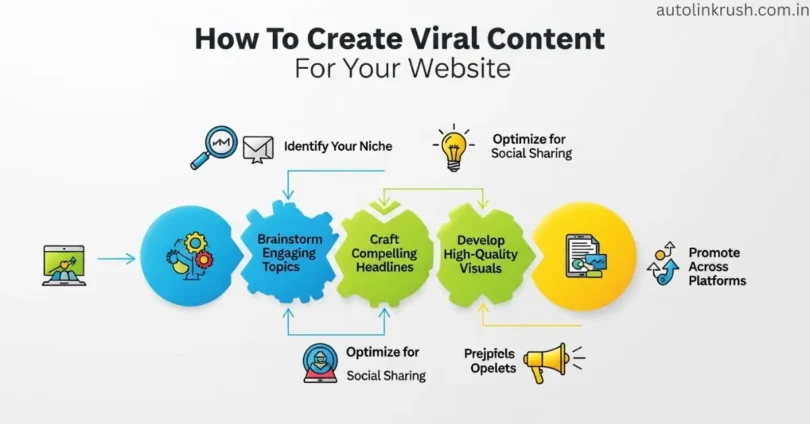
How To Create Viral Content For Your Website: Creating content that spreads like wildfire can feel like a mystery, but it doesn’t have to be. Viral content is simply the kind of material that people love to read, share, and talk about. If your website has content that connects with your audience, solves a problem, or makes them feel something, it can quickly reach thousands of people.
Know Your Audience Deeply
Understanding your audience is the first step to creating content they will love and share.
- Research Demographics: Find out age, gender, location, and interests.
- Analyze Behavior: Check what pages they visit, how long they stay, and what they click on.
- Use Surveys and Polls: Ask your readers what topics they like or what problems they face.
- Monitor Social Media: See what your audience shares, comments on, and talks about.
- Study Competitors: Look at which content performs best on similar websites.
Knowing your audience helps you create content that truly connects and encourages sharing.
Choose Topics People Love
Picking the right topic is key to creating content that people enjoy and share.
- Follow Trends: Check what’s trending in your industry or on social media.
- Use Keyword Research: Find topics that people search for but have low competition.
- Solve Problems: Focus on topics that answer common questions or challenges.
- Check Competitor Content: See what content performs well on similar websites.
- Look at Social Media Engagement: Notice which posts get likes, shares, and comments.
Choosing the right topics ensures your content attracts attention and gets shared widely.
Create Engaging Headlines That Hook
A strong headline grabs attention and makes people want to read your content.
- Use Numbers: Headlines like “5 Tips to…” or “7 Ways to…” catch the eye.
- Ask Questions: Engage readers with curiosity, e.g., “Do You Know How to…?”
- Use Strong Adjectives: Words like “Amazing,” “Shocking,” or “Easy” make headlines exciting.
- Keep It Short and Clear: Make headlines easy to read and understand quickly.
- Include Keywords: Use important words your audience searches for.
A catchy headline is the first step to getting readers to click and share your content.
Write Simple, Valuable, and Shareable Content
Your content should be easy to read, helpful, and something people want to share.
- Use Simple Language: Write in easy words so everyone can understand.
- Break into Short Paragraphs: Helps readers scan and stay engaged.
- Add Bullet Points and Lists: Makes information clear and organized.
- Provide Real Value: Solve problems, answer questions, or teach something useful.
- Include Examples: Show real-life situations or stories to make it relatable.
Simple, valuable content keeps readers happy and encourages them to share it widely.
Add Visuals and Media
Adding images, videos, and other media makes your content more interesting and easier to understand.
- Use High-Quality Images: Clear and relevant pictures grab attention.
- Include Infographics: Show information in a simple visual format.
- Add Videos: Short clips can explain topics faster and keep readers engaged.
- Use Screenshots or Diagrams: Helpful for tutorials or step-by-step guides.
- Optimize File Size: Make visuals load fast to avoid slowing down your website.
Visuals and media make content more engaging, easy to understand, and shareable.
Optimize for Social Sharing
Making your content easy to share helps it reach more people and go viral.
- Add Social Share Buttons: Make it easy for readers to share on Facebook, Twitter, Pinterest, etc.
- Write Catchy Meta Titles and Descriptions: These show up when your content is shared and attract clicks.
- Use Hashtags: Helps your content reach a wider audience on social platforms.
- Create Clickable Images: Shareable images with quotes or tips encourage sharing.
- Encourage Sharing in Content: Ask readers to share if they find it helpful or interesting.
Optimizing for social sharing helps your content reach more people and gain more visibility.
Use Storytelling to Connect Emotionally
Stories make your content memorable and help readers feel connected to it.
- Start with a Hook: Begin your story with something that grabs attention.
- Show a Problem: Explain a challenge or situation your audience can relate to.
- Provide a Solution: Show how the problem was solved or how readers can benefit.
- Include Personal or Real-Life Examples: Makes the story authentic and relatable.
- Use Emotions: Include feelings like joy, surprise, or inspiration to connect deeply.
Using storytelling makes your content engaging, relatable, and more likely to be shared.
Future of How To Create Viral Content For Your Website
Understanding future trends can help you create content that stays popular and shareable.
- Follow Emerging Trends: Keep an eye on new topics, tools, and social media platforms.
- Use AI and Automation Tools: Tools can help create, optimize, and analyze content faster.
- Focus on Short-Form Content: Videos, reels, and quick tips are becoming highly shareable.
- Interactive Content: Quizzes, polls, and interactive posts engage audiences more.
- Voice and Visual Search Optimization: Prepare for people searching with voice assistants or images.
Staying updated and adaptable ensures your content continues to go viral in the changing digital world.
Common FAQs about How To Create Viral Content For Your Website
Some FAQs of How To Create Viral Content For Your Website:
What types of content are more likely to go viral?
Content that entertains, educates, or emotionally connects with readers usually has a higher chance of going viral.
How often should I post content to increase virality?
Consistency matters more than frequency. Posting regularly, even 2–3 times a week, can build momentum.
Can short-form content go viral more easily than long articles?
Yes, short, concise posts, videos, and infographics are often shared more because they are quick to consume.
How do I know if my content has viral potential before publishing?
Analyze trends, social engagement metrics, and audience interest; if your content sparks curiosity or emotion, it has potential.
Should I focus more on social media or my website for viral content?
Both are important. Social media helps content spread quickly, while your website builds authority and keeps readers engaged.
Do hashtags really help in making content viral?
Yes, relevant hashtags increase discoverability on platforms like Instagram, Twitter, and LinkedIn.
Is it necessary to use influencer marketing for viral content?
While not required, collaborating with influencers can greatly boost reach and shares.
Can repurposing old content help in going viral?
Absolutely! Updating, adding visuals, or turning old articles into videos can give content new life.
How important is timing in making content viral?
Posting when your audience is most active online can increase the chances of quick engagement and shares.
Do interactive elements like polls and quizzes increase virality?
Yes, interactive content encourages participation and sharing, which can help your content go viral.
Conclusion
Creating viral content is not just about luck it is about understanding your audience, experimenting with new formats, and staying creative. Always look for ways to add fresh ideas, surprising facts, or interactive elements that make readers pause, engage, and share.
Remember, content that sparks curiosity, laughter, or inspiration tends to travel farther. By continuously learning from analytics and testing new approaches, your website can consistently produce content that attracts attention and builds a loyal audience.