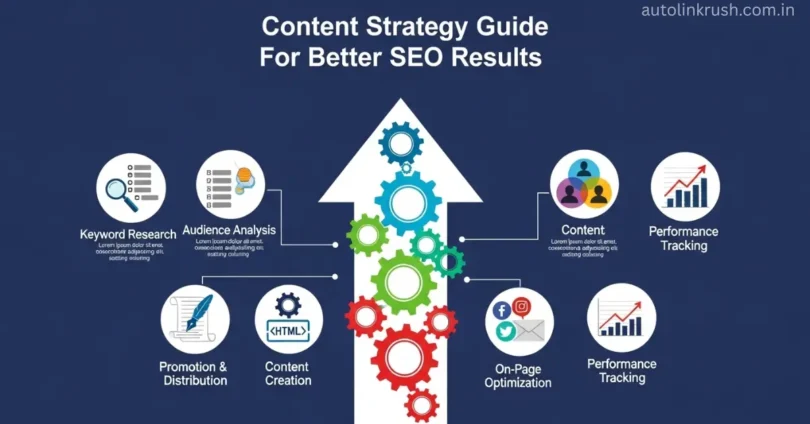
Content Strategy Guide For Better SEO Results: Creating good content is not enough if people cannot find it on Google. This is where a strong content strategy helps. A content strategy gives clear direction about what to write, why to write, and how to write for better SEO results.
Without a proper plan, content becomes confusing and fails to rank. This guide will help you understand content strategy step by step in very simple English, so even beginners can create content that search engines like and people trust.
Setting Clear SEO Goals Before Creating Content
Before writing any content, it is important to know what you want to achieve. Clear SEO goals help you stay focused and avoid wasted effort.
- Decide if your main goal is to increase website traffic
- Choose whether you want to rank for specific keywords
- Plan if your content should bring leads or sales
- Set a goal to improve brand awareness and trust
- Focus on answering user questions clearly
- Decide if content is for beginners or advanced users
When SEO goals are clear, content becomes more focused, useful, and easier to rank on search engines.
Knowing Your Target Audience Clearly
Good content starts with understanding who you are writing for and what they really need.
- Identify the age group of your readers
- Understand their problems and pain points
- Know what type of information they are searching for
- Learn the language level they are comfortable with
- Find out which devices they mostly use
- Understand their search intent on Google
When you clearly know your target audience, your content becomes more helpful, engaging, and SEO-friendly.
Finding the Right Keywords for Your Content
Keywords help search engines understand what your content is about and show it to the right people.
- Focus on keywords people actually search on Google
- Choose keywords that match user search intent
- Use simple and clear keywords, not difficult words
- Prefer long-tail keywords for better ranking chances
- Check keyword competition before selecting
- Choose keywords related to your main topic
The right keywords connect your content with the right audience and improve your chances of better SEO results.
Mapping Keywords to Content Topics
Keyword mapping helps you connect the right keyword with the right content topic.
- Assign one main keyword to one content topic
- Match keyword intent with the topic purpose
- Avoid using the same keyword on multiple pages
- Group similar keywords under one topic
- Decide which keywords need separate articles
- Map keywords before starting content writing
Proper keyword mapping makes content more organized, avoids confusion, and improves SEO performance.
Writing SEO-Friendly Content That People Enjoy
SEO-friendly content should be easy to read, helpful, and enjoyable for real people.
- Write content in simple and clear language
- Focus on helping the reader first
- Use the main keyword naturally in content
- Keep sentences short and easy to understand
- Break content into small paragraphs
- Use headings to improve readability
When content is written for people and optimized for SEO, it ranks better and keeps readers engaged.
Optimizing Content Structure for Search Engines
A clear content structure helps search engines and users understand your content easily.
- Use one clear main heading for the page
- Organize content with proper subheadings
- Keep paragraphs short and simple
- Use bullet points to improve readability
- Place important information at the top
- Maintain logical flow from start to end
A well-structured content layout improves user experience and helps search engines rank your content better.
Using Internal Linking to Boost SEO Power
Internal linking connects your pages and helps search engines understand your website better.
- Link related pages with each other naturally
- Use clear and meaningful anchor text
- Help users find more useful information
- Spread SEO value across your website
- Avoid linking too many pages in one post
- Place internal links where they make sense
Strong internal linking improves site structure, boosts SEO strength, and keeps users engaged longer.
Adding Visual Content for Better Engagement
Visual content makes your article more attractive and easier to understand for readers.
- Use images to explain complex ideas simply
- Add visuals to break long text sections
- Use relevant images related to the topic
- Keep image quality clear and clean
- Use visuals to increase time spent on page
- Add charts or diagrams for better explanation
Visual content improves user experience, keeps readers engaged, and supports better SEO performance.
Future of Content Strategy Guide For Better SEO Results
Content strategy is always changing, and knowing the future trends can keep your SEO strong.
- Focus on creating content for user intent, not just keywords
- Use AI and smart tools to analyze and improve content
- Prioritize mobile-friendly and fast-loading content
- Create more interactive content like quizzes, polls, and videos
- Focus on voice search and featured snippets for visibility
- Emphasize quality over quantity as search engines evolve
Understanding future trends helps you build a strong content strategy that stays effective and keeps your SEO results growing.
Common FAQs about Content Strategy Guide For Better SEO Results
Some FAQs of Content Strategy Guide For Better SEO Results:
What is a content audit and why is it important for SEO?
A content audit checks your existing content to see what works, what needs updating, and what can be removed for better SEO results.
How often should I review my content strategy?
You should review your content strategy at least every 3–6 months to stay updated with search trends and audience needs.
Can short-form content be effective for SEO?
Yes, short-form content can rank well if it answers specific questions clearly and provides value.
Should I focus on blog posts only for SEO?
No, SEO works with many types of content like videos, infographics, podcasts, and guides.
How does user engagement affect SEO?
Higher engagement, like clicks, comments, and shares, signals to search engines that your content is useful, improving rankings.
Is it necessary to follow a content posting schedule?
Yes, a consistent posting schedule helps search engines crawl your site regularly and keeps your audience returning.
How can I make content shareable for SEO benefit?
Include useful tips, visuals, and easy-to-read formatting so readers are more likely to share your content on social media.
Do meta descriptions still impact SEO?
Yes, meta descriptions influence click-through rates, which indirectly affects SEO ranking.
Can internal linking improve content authority?
Yes, linking relevant pages internally spreads authority and helps search engines understand your website better.
Should I focus on local SEO in my content strategy?
If your business targets a specific region, optimizing content for local SEO can drive highly relevant traffic and improve results.
Conclusion
A strong content strategy is not just about writing and publishing; it is about thinking ahead and creating content that grows with your audience. By focusing on trends, using data to guide decisions, and experimenting with new formats like podcasts, videos, and interactive tools, you can make your website more valuable and trustworthy.
Remember, SEO success comes from a mix of creativity, planning, and adapting to changes in search behavior. A future-ready content strategy ensures your website continues to attract, engage, and convert visitors over time.